


Every day, thousands of pedestrians, hundreds of cyclists, cars and public transport vehicles pass through it, and in the summer, countless tourists. Here, you can visit the City Hall, cafés and restaurants, send a parcel at the post office, buy Gdynia souvenirs at the City Tourist Information, purchase impressive bouquets of flowers, stay overnight in one of the hostels, and buy delicacies from around the world. The list goes on, but do we know the origins of one of the most important streets in Gdynia? Let's go back to the beginning of the 20th century.
It is 1908. Gdynia is more and more often the first choice for summer visitors who appreciate its pristine beach, tranquillity, and hospitable residents. The winding Wiejska Street (today's Starowiejska Street) is long, so the shortest route from the railway station to the Kurhaus (Resort House) and further towards the sea and the wooden pier is being marked out. The straight line called Kurhausstrasse – Kuracyjna Avenue turns out to be an excellent idea.
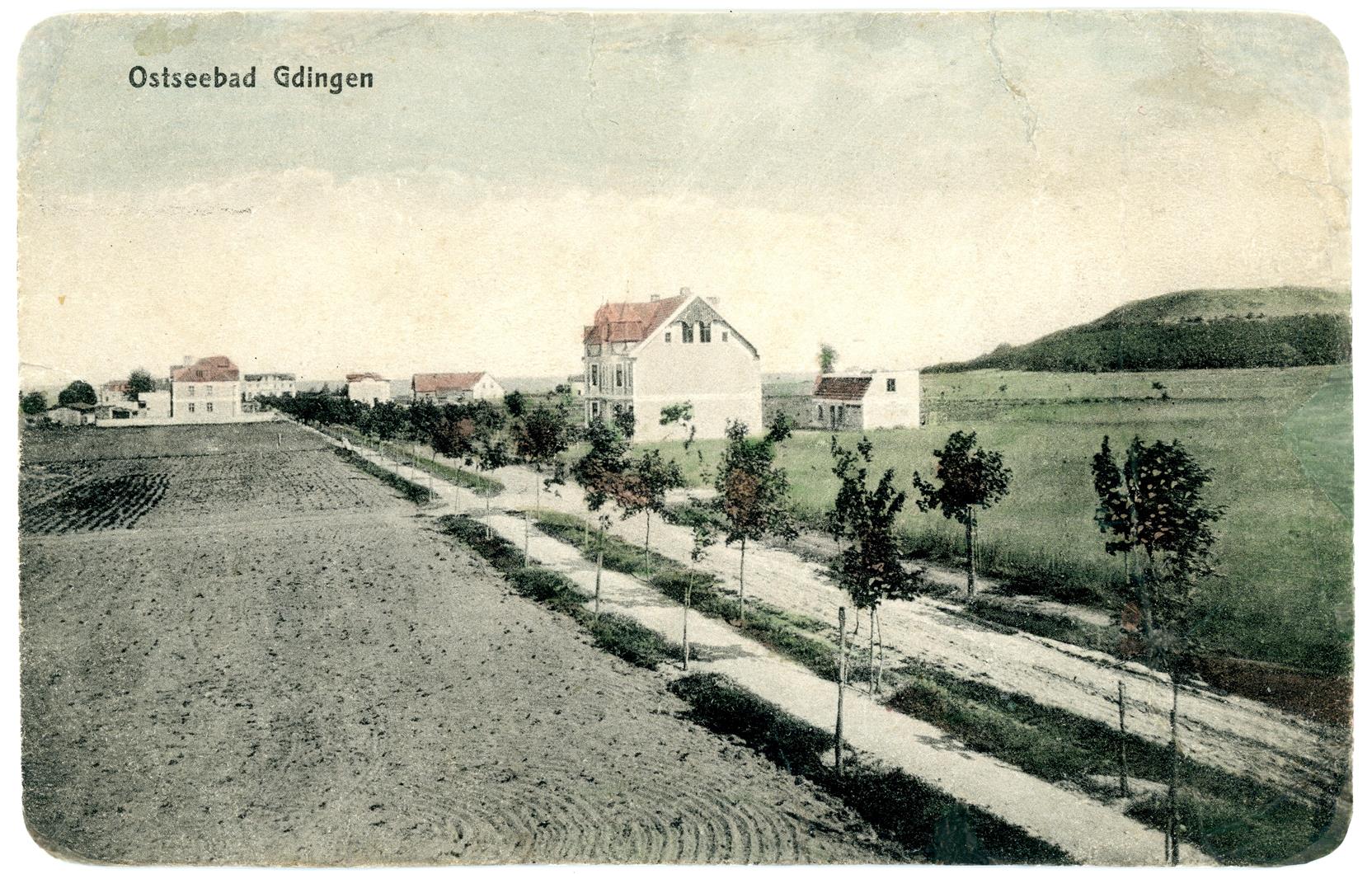
Photo: From the collection of the Museum of the City of Gdynia (publ. J.H. Jacobsohn)
The first person to build a house on the new street was Erich Kohnke. He erected the building in 1910, and Johann Plichta later bought it from him to open a restaurant with a café. In the following years, on the opposite side of the street, Jan Radtke began the construction of a guesthouse with a characteristic turret. Among the most famous guests of this summer residence was the writer Stefan Żeromski. The following years saw the construction of more buildings, including the villas ‘Elle’ (at the intersection of 10 Lutego and Władysława IV Streets), ‘Luiza’ (18, 10 Lutego Street), and ‘Łucja’ (now ‘Julia’, at 6, 10 Lutego Street), which laid the foundations for Gdynia's resort development. It did not take long for the small village to become famous throughout the country. Every year, increasing numbers of tourists flocked to the seaside town. For some, a temporary stay in Gdynia was not enough, and they decided to tie their fate to this place forever.
The 1920s brought exciting developments. A port was to be built in Gdynia, and the coastal village was to be granted city rights. The economy was booming, new apartment houses and buildings were being constructed, housing, among others, the French-Polish Consortium for the Construction of the Port in Gdynia (today 14, 10 Lutego Street), the Żegluga Polska shipping company (4, 10 Lutego Street), the Pętkowski's ‘Confort’ building (39, 10 Lutego Street), which accommodated the Municipal Court, the Water and Sewage Company, the French–Polish Bank and numerous service premises. The Bank of Poland was built (at the intersection of 3 Maja and 10 Lutego Streets), and a branch of National Development Bank (Bank Gospodarstwa Krajowego, BGK) was opened. The latter, understanding the needs of fishermen, willingly granted loans for the purchase of specialised equipment. Among the subsequent developments was a school known as ‘Jedynka’, whose co-educational building opened in 1928 at 26, 10 Lutego Street (in later years, a private secondary school, a music school, a language school and the Polish YMCA were also established). A Post Office (10, 10 Lutego Street) and consulates were also built. In 1929, the State Police station moved into the villa ‘Józefina’ (now ‘Julia’). The rapid urbanisation of the area required solid infrastructure, which is why 10 Lutego Street—named in memory of the symbolic marriage of the Republic of Poland to the sea—was quickly paved.
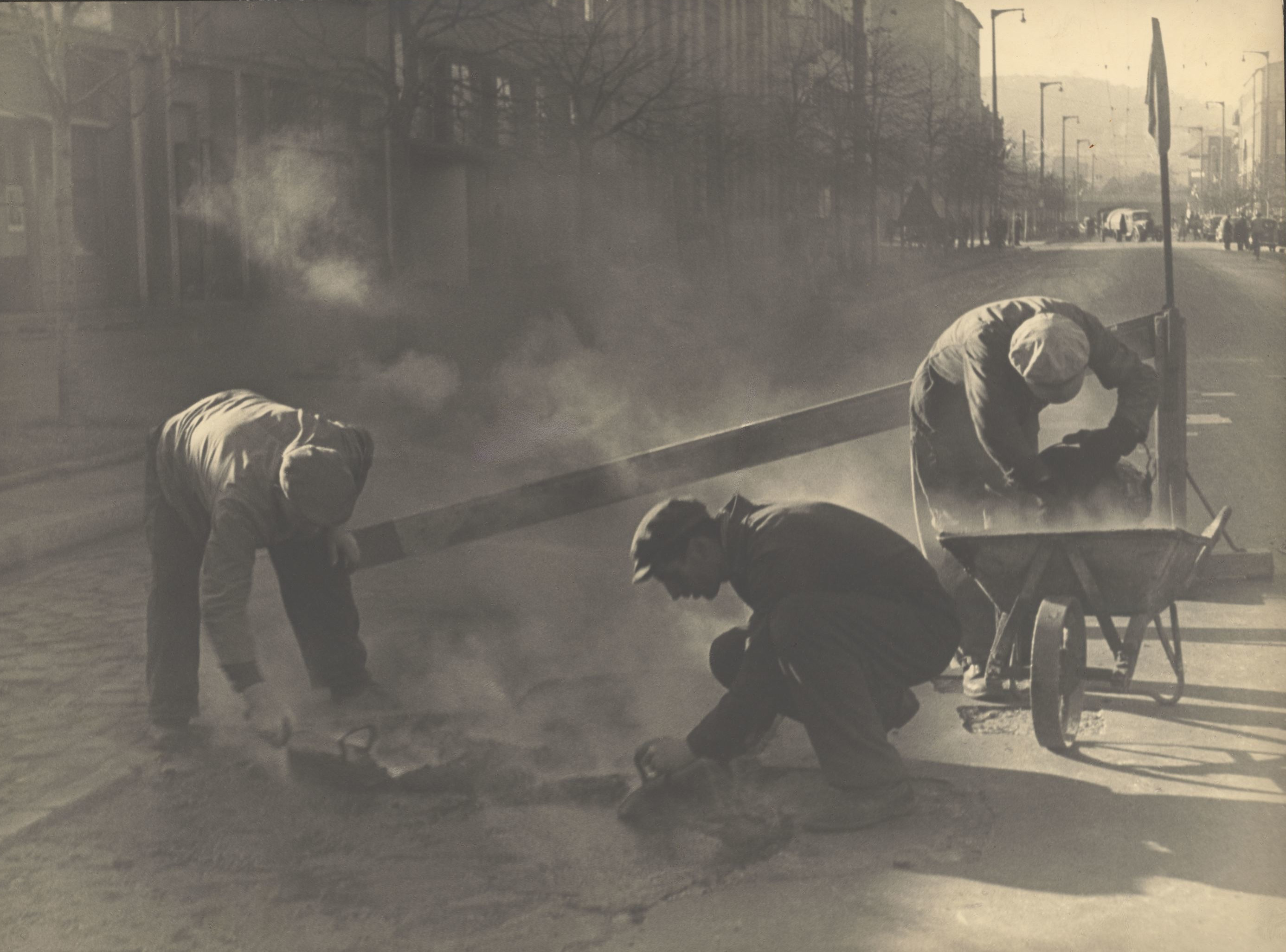
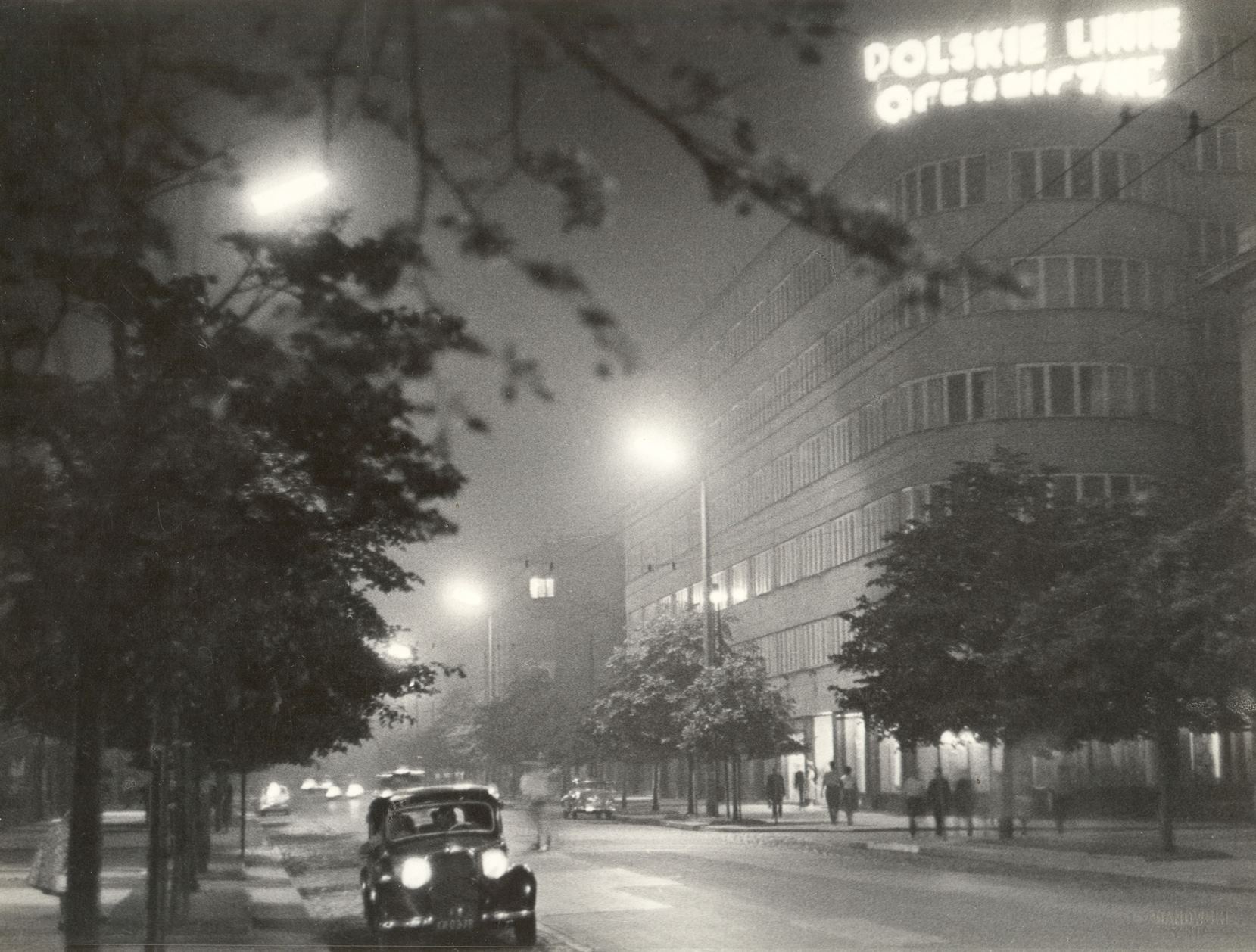
Photo: From the collection of the Museum of the City of Gdynia (Edmund Zdanowski)
City life in the interwar period was in full swing. In Gdynia, you could buy practically anything. On 10 Lutego Street, you could visit a hatter to buy headwear, which was both necessary and fashionable at the time, cosmetics, colonial products, tableware, go to the dry cleaner's, buy ball gowns and fabrics from which a seamstress could sew such clothes. At 10 Lutego Street, specialists were on duty, offering a ‘regenerative cream’ that removed wrinkles, burns and... freckles. The list also includes fashionable restaurants, cafés and entertainment venues, among which were: “Confort”, ‘George’, ‘Alhambra – Palais de danse’, ‘Grand Cafe’, and bars: ‘Okocim’, ‘Bachus’, and “Mały”. The most famous ‘Cafe Bałtyk’ at number 24 hosted dances, art exhibitions, recitals and fashion shows. The largest of these was the ‘Europa’ café. Cinema lovers at the time had a choice of 400 seats at the Czarodziejka cinema, and in later years, fans of the tenth muse could go to the Lido cinema, turning into 3 Maja Street. At that time, as today, the residents of Gdynia and officials would walk down 10 Lutego Street to the accompaniment of orchestras, celebrating various events, including Gdynia's birthday, regaining access to the sea and the Constitution Day on 3 May.
This joyful period of growth was interrupted by World War II. German troops entered Gdynia and the occupation began. Świętojańska, the most important street, was named after the dictator, and the second most important street, 10 Lutego, was named after Hitler's right-hand man, Hermann Göring Strasse. Not only did the city's inhabitants disappear, but also all Polish and Gdynia symbols and names. All popular and key venues in the city became places of work, rest and entertainment for Germans. The residents who remained, even while working for the occupiers, were not passive; they regularly helped other residents survive the war and were active in the underground.
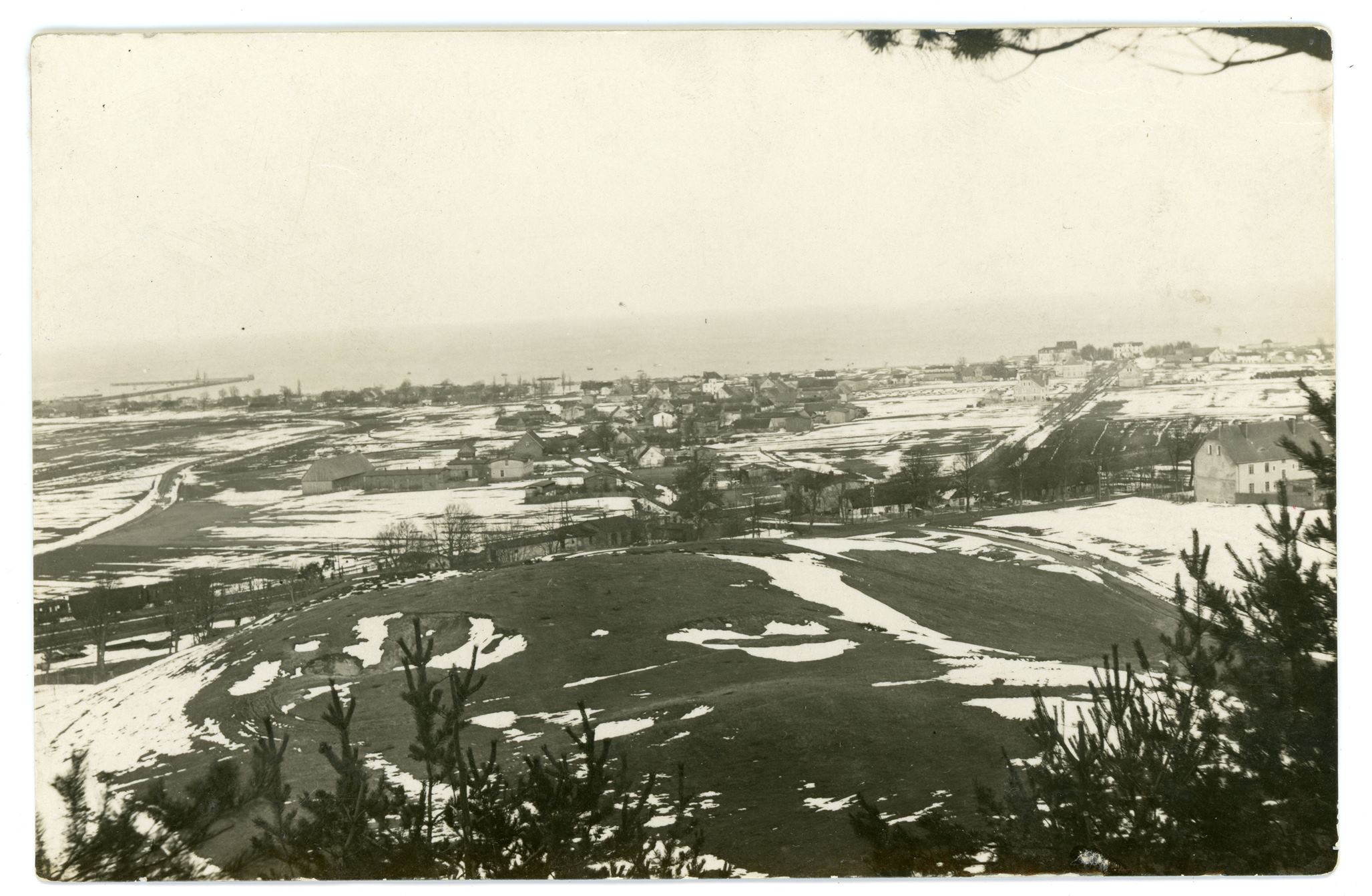
Photo: From the collection of the Museum of the City of Gdynia (Roman Morawski)
After the war, 10 Lutego Street regained its name, but it was still a long time before it regained its former glory. Some of the residents and their descendants returned and had the opportunity to reclaim or resell their property, as many buildings destroyed during the war underwent several years of tedious and costly reconstruction. Polish Ocean Lines (Polskie Linie Oceaniczne, PLO) and Chinese-Polish Shipping Company ‘Chipolbrok’ moved into the building at 24, 10 Lutego Street. The Post Office also regained its building. Gdynia was not only being rebuilt; in many ways, the city was being created from scratch, not necessarily following pre-war aesthetics.
Services, ice cream parlours, cafés, flower shops, electronics stores and greengrocers returned on 10 Lutego Street. Due to the maritime character of the city, attractive products continued to be brought to Gdynia, luring visitors from all over the country. Despite the communist era, residents were able to enjoy the places that had been recovered after the war. Cafe Bałtyk was returned to them, and in the following years, Ranaissance, Fraszka, Literatka, Pod Ryjkiem and the Aloza bar were also opened. Residents could go to Inter Club, Karliczek, or Delicje, which is still well known today. The Lido cinema returned to audiences under a new name – Atlantic. The House of Crafts also became home to the Drama Theatre and the Żaczki band. Elżbieta Subbotko's Contemporary Art Gallery and a photo studio opened at 4, 10 Lutego Street, where residents could have their photos taken for necessary documents, or photographers could take souvenir photos with a teddy bear or in a toy car in Kościuszki Square, and the developed photos could be picked up the next day at the studio.
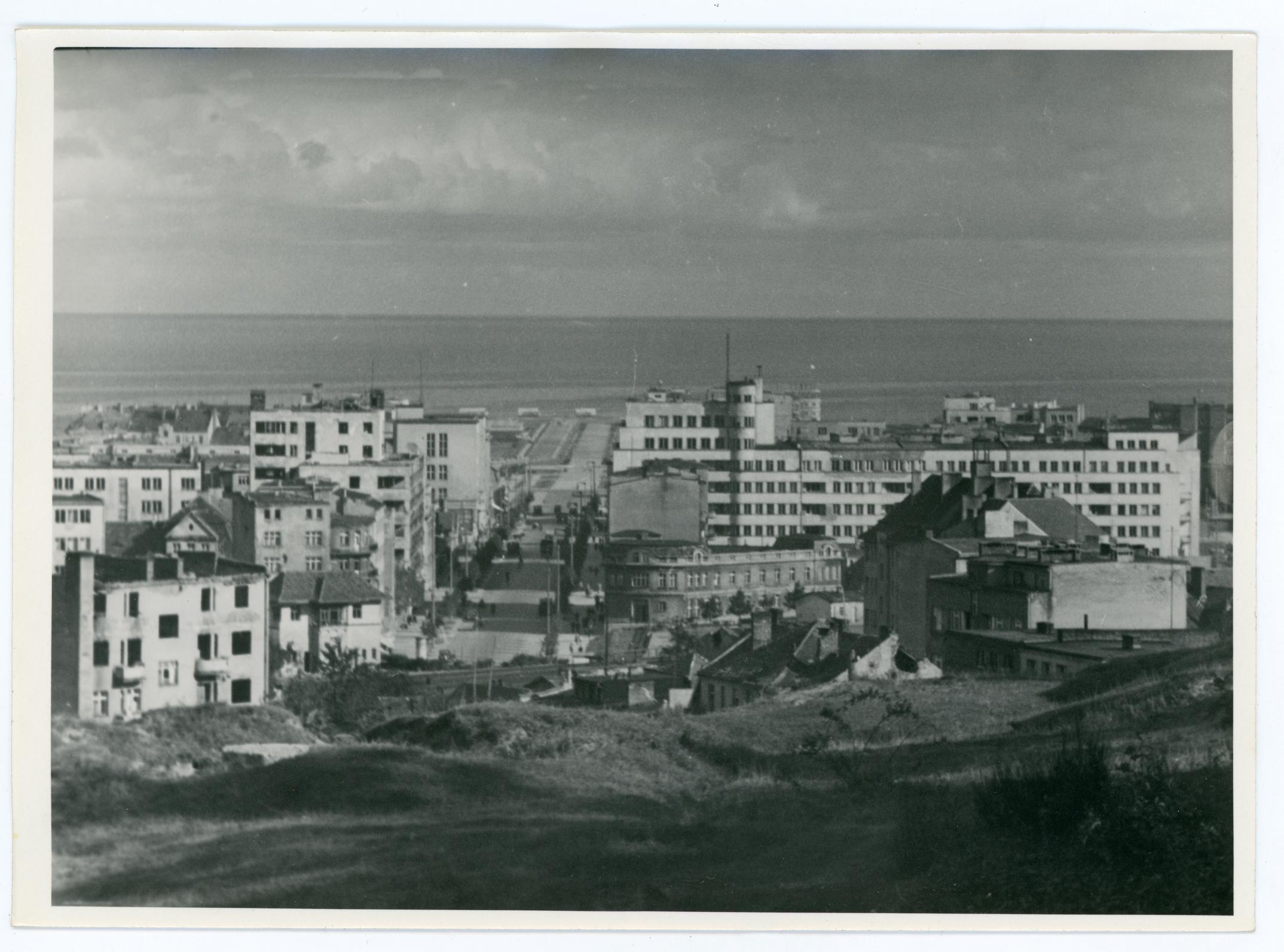
Photo: From the collection of the Museum of the City of Gdynia (Tadeusz Wański)
10 Lutego Street also witnessed tragic events in post-war Polish history. On 17 December 1970, following the morning shooting on the footbridge at the Gdynia Stocznia SKM station, a march of protesters passed along 10 Lutego Street. In the years that followed, Gdynia’s residents protested against the authorities in various ways, demonstrating their independence during the period of martial law. The street also witnessed a momentous occasion: the passage of Pope John Paul II to Kościuszki Square, where he met with the gathered crowd.
Today, 10 Lutego Street forms part of a designated Monument of History—a distinction awarded by the President of the Republic of Poland. It is the first place visitors see upon leaving the railway station when heading towards the square and the sea. Looking straight ahead, the view extends far beyond the street’s 635-metre length, creating a panorama unique in the country.